Finance teams rarely change planning tools because a vendor called. They change because the close keeps slipping, the forecast lands after the decision it was meant to inform, or a board question takes two days to answer.
Below are seven signs a finance team has outgrown basic FP&A software, drawn from what high growth and enterprise SaaS finance teams run into. Each one includes the symptom, why entry-level software causes it, and what to do about it.
The short version
Data collection eats the month. Your team assembles reports instead of reading them.
Forecasts arrive late or land wrong, and nobody trusts the variance.
You cannot break revenue into new, expansion, contraction, and churn without rebuilding it by hand.
Headcount lives in a spreadsheet that disagrees with your HRIS.
Department heads keep private forecasts because they do not trust the shared one.
Executives read last month’s numbers and make this month’s decisions.
A what-if takes days, so the answer arrives after the meeting.
How we picked these seven
We looked at where the work actually stalls for recurring-revenue finance teams: consolidating across systems, modeling subscription revenue, planning headcount, keeping a forecast current, sharing numbers with budget owners, and testing a scenario quickly. If two or three of these sound familiar, the problem is usually process. If five or more do, it is the software.
1. Your team spends more time collecting numbers than reading them
The pattern is easy to spot. Month end arrives, someone exports the trial balance from NetSuite or Sage Intacct, someone else pulls pipeline from Salesforce or HubSpot, a third person chases the payroll file. Two days later there is a deck. By then the questions have moved on.
Entry-level planning software causes this because it treats your source systems as places to export from rather than connect to. Every cycle repeats the same CSV work, and every repeat is a chance to paste into the wrong column.
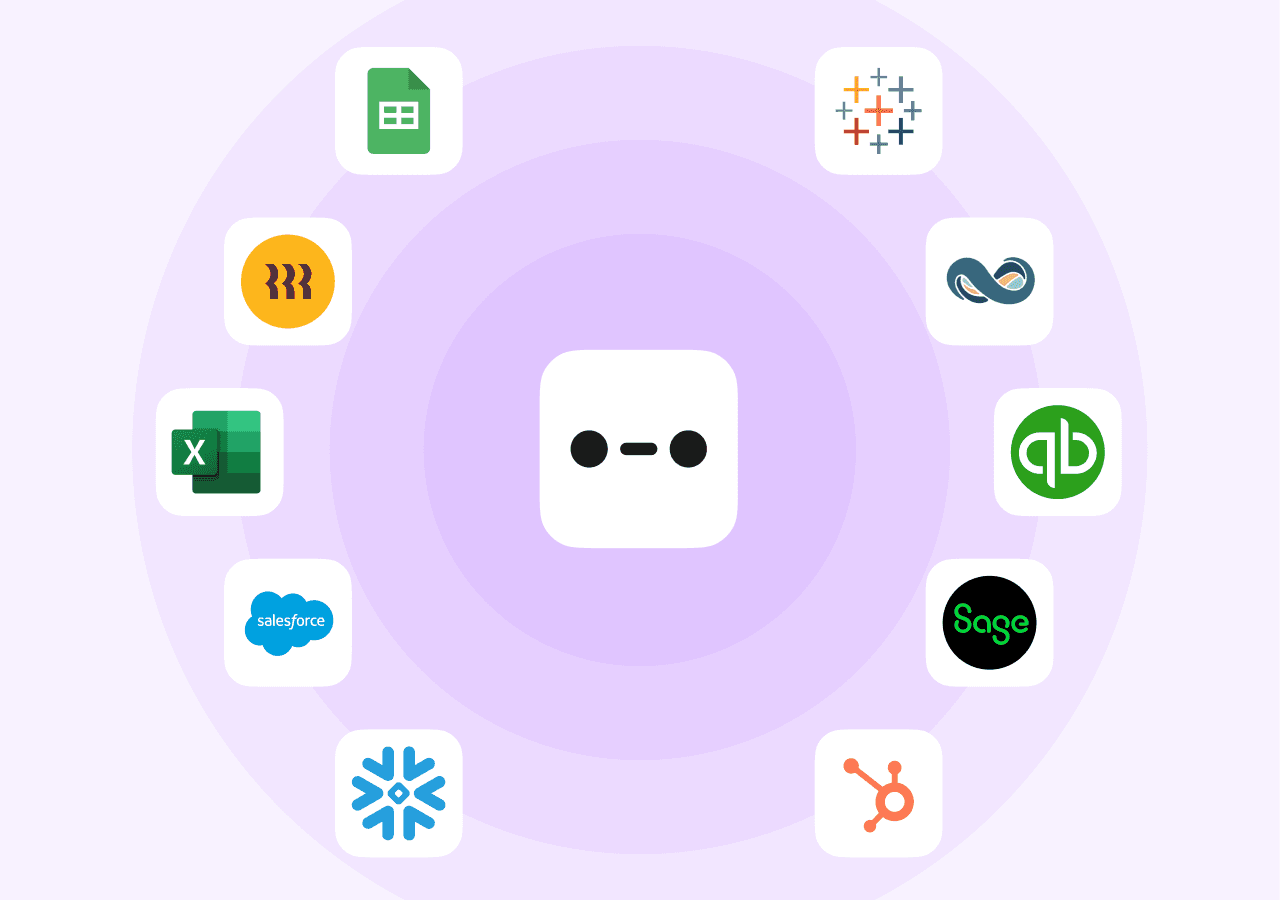
The fix is a platform that connects to the systems directly and refreshes on its own. Abacum has 76 native integrations across ERP, HRIS, CRM, billing, BI, and data warehouses, so actuals arrive without anyone exporting anything. The analysis is then what the week is spent on.
2. Forecasts arrive late, or they arrive wrong
If a rolling forecast takes six to eight weeks, it is not rolling. It is an annual budget with extra steps. And if the annual budget is stale three weeks after approval, the problem is not discipline, it is that updating an assumption means touching a dozen tabs.
Basic tools hard-code assumptions into cells. Change a price, and someone has to find every dependent formula. That work is slow and it is also where the errors come from.
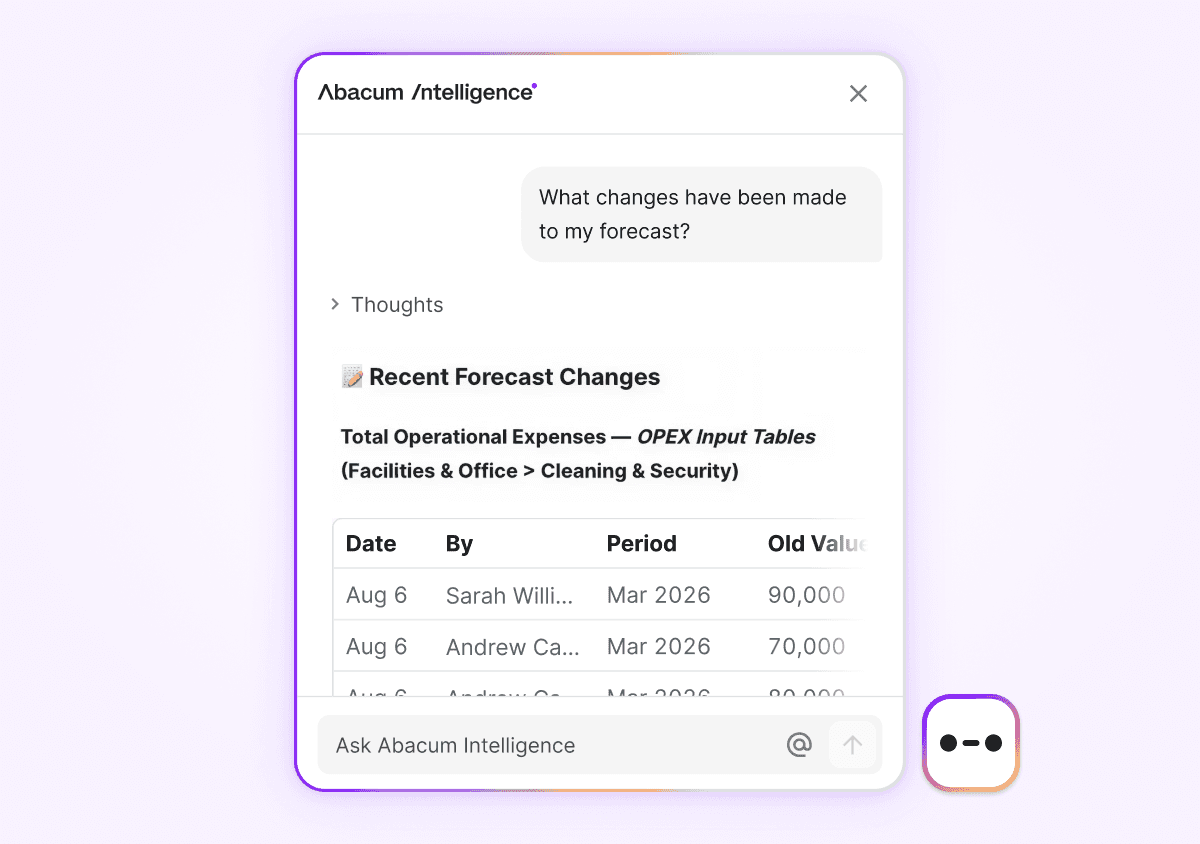
Driver-based forecasting fixes the mechanics. Link the assumptions to the operational drivers once, change one input, and the dependent calculations follow. Abacum Intelligence generates a baseline forecast and flags the numbers that moved more than they should have, which is usually where you want to spend your time anyway. More on the mechanics in our guide to budgeting and forecasting.
3. You cannot see subscription revenue at the granularity you need
Recurring revenue is not one line. It is new business, expansion, contraction, and churn, and the four behave differently. If your software reports revenue as a single number, your forecast is an average of four trends moving in different directions.
This shows up first in net revenue retention and cohort analysis. Both need revenue split by segment and tracked over time, and both are painful when billing data sits in one system and cost allocation in another.
What to look for: multi-dimensional modeling, an ARR waterfall you do not rebuild each month, and cohort models that connect to the P&L, balance sheet, and cash flow rather than sitting beside them.
4. Headcount planning disagrees with your HRIS
People are the largest cost line for most SaaS companies, and headcount is usually the plan that lives furthest from the model. HR approves a req in one system, finance tracks it in a spreadsheet, and the two reconcile once a month if someone remembers.
Basic software cannot infer attrition, model salary bands, or tie an approved req to its budget impact, so teams keep two versions and argue about which is current.
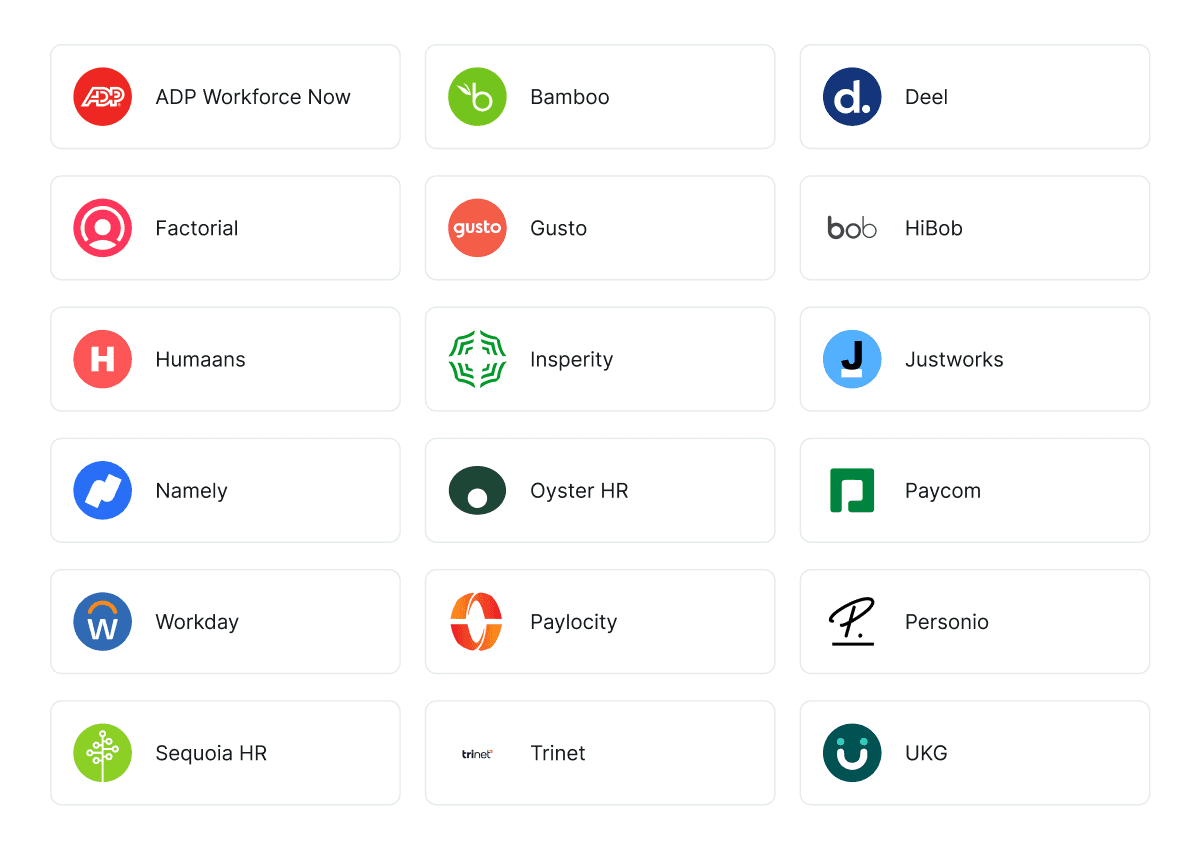
Connect the model to the HRIS instead. Abacum has 35 HRIS connectors, including BambooHR, Workday, Paylocity, HiBob, Rippling, Personio, and Deel, so when someone joins, leaves, or changes role, the plan updates. Approval workflows let a department head submit a req without it becoming an email thread. We wrote up the process side in headcount planning best practices, and the product side sits under headcount planning.
5. Department heads keep their own forecasts
This one is easy to miss because nobody announces it. You find out when a VP presents a number that does not match yours, and theirs is the one they have been running the team on.
Shadow forecasts appear when budget owners cannot get to the data, cannot see how their numbers were derived, or have been burned by a version that changed without warning.
Give owners their own view with the underlying detail visible, and route changes through a workflow so people can see what moved and who moved it.

6. Executives are reading last month’s numbers
If your CFO cannot answer a board question in the room, the reporting is too slow. Static monthly reporting means that by the time the pack is distributed, it describes a period that is already closed.
The test is simple. Ask how long it takes to answer “why did gross margin move in the EMEA segment last month” without commissioning a new report. If the answer is measured in days, that is the sign.
Dashboards that refresh from source, with drill-down and a written summary of what changed, mean the meeting starts from a shared understanding instead of a walkthrough. This is also what makes investor reporting a byproduct of the month rather than a project.
7. A what-if takes days instead of minutes
Pricing changes, hiring freezes, a funding round that slips a quarter, an acquisition that needs a number by Friday. These arrive without notice.
In spreadsheet-based models, testing a 10% revenue reduction means finding every dependency and updating it, then keeping that version separate from the three other versions your colleagues are building. Most of the time goes on keeping the versions straight rather than on the math.
Self-service scenario planning means adjusting the assumption and seeing the effect across all three statements, then comparing scenarios side by side. The value is answering in the meeting where the decision is made.
What better looks like
Abacum is an AI-native FP&A platform built for SaaS and recurring-revenue finance teams. It connects to your ERP, HRIS, CRM, and billing systems, so actuals, assumptions, and plans sit in one place, and it supports driver-based forecasting, rolling budgets, scenario planning, and cohort-based revenue modeling.
Abacum Intelligence handles the data cleaning, classification, and anomaly detection that otherwise fills the first week of the month, and drafts the baseline forecast for a human to argue with. Customers report cutting manual reporting by around five days per month.
What it does
Driver-based and AI-assisted forecasting, with anomalies flagged rather than hunted.
Cohort-based revenue modeling, ARR waterfall, and net dollar retention at segment level.
Headcount planning connected to 35 HRIS systems, with attrition inference and salary modeling.
Scenario planning across the P&L, balance sheet, and cash flow.
Department-level ownership with approval workflows for OPEX and headcount requests.
Dashboards that refresh from source, with drill-down and written summaries.
Where it fits, and where it does not
Abacum is built for high growth and enterprise finance teams. A ten-person startup running a single spreadsheet does not need it yet. Teams new to cohort analytics take a little time to get comfortable with the modeling, and the platform earns its value once several source systems are connected, which takes some setup at the start.
It is rated 4.8 out of 5 on G2, and it is SOC 2 Type II certified and GDPR compliant. Implementation is measured in weeks, with onboarding support included.
Where basic tools stop
Capability | Spreadsheets | Entry-level FP&A tools | Abacum |
|---|---|---|---|
ARR waterfall modeling | Manual, rebuilt each month | Limited | Native |
HRIS connectors | None | A handful | 35 |
Native integrations | None | Few | 76 |
Scenario comparison | Separate files | Partial | Side by side |
AI-assisted forecasting | No | No | Abacum Intelligence |
What to ask on the demo
Write down where your current process breaks before you book anything. Then ask these.
Which of my source systems do you connect to natively, and which need custom API work? Native connectors are live in days. Custom work is a project.
Can my team build and change models without IT? Ask them to modify one live, not on a slide.
Show me an ARR waterfall and a cohort model in the product, using data shaped like mine.
How long is implementation, and who does the work? Weeks and months are very different answers.
What does administration cost after go-live, and can finance own it?
For a wider view of the market, we keep a comparison of the best FP&A software tools and a shorter list of six features worth insisting on. If forecasting is the immediate problem, start with budgeting and forecasting software.
Building the business case
Count the hours before you argue the value. Track how long your team spends each month on data collection, report building, and model maintenance. For most finance teams that number is several days, and it is the same several days every month.
Then find two or three decisions that went badly because the number arrived late. A cash flow squeeze nobody flagged. A hiring plan that ignored attrition. A scenario that landed after the acquisition decision was made. Those examples land with a CFO better than a percentage improvement in efficiency, because they name a cost that has already been paid.
If you want to see what this looks like in your own numbers, book a demo. You can also read how other finance teams made the move on our customers page, or read more about the AI-native FP&A platform behind it.